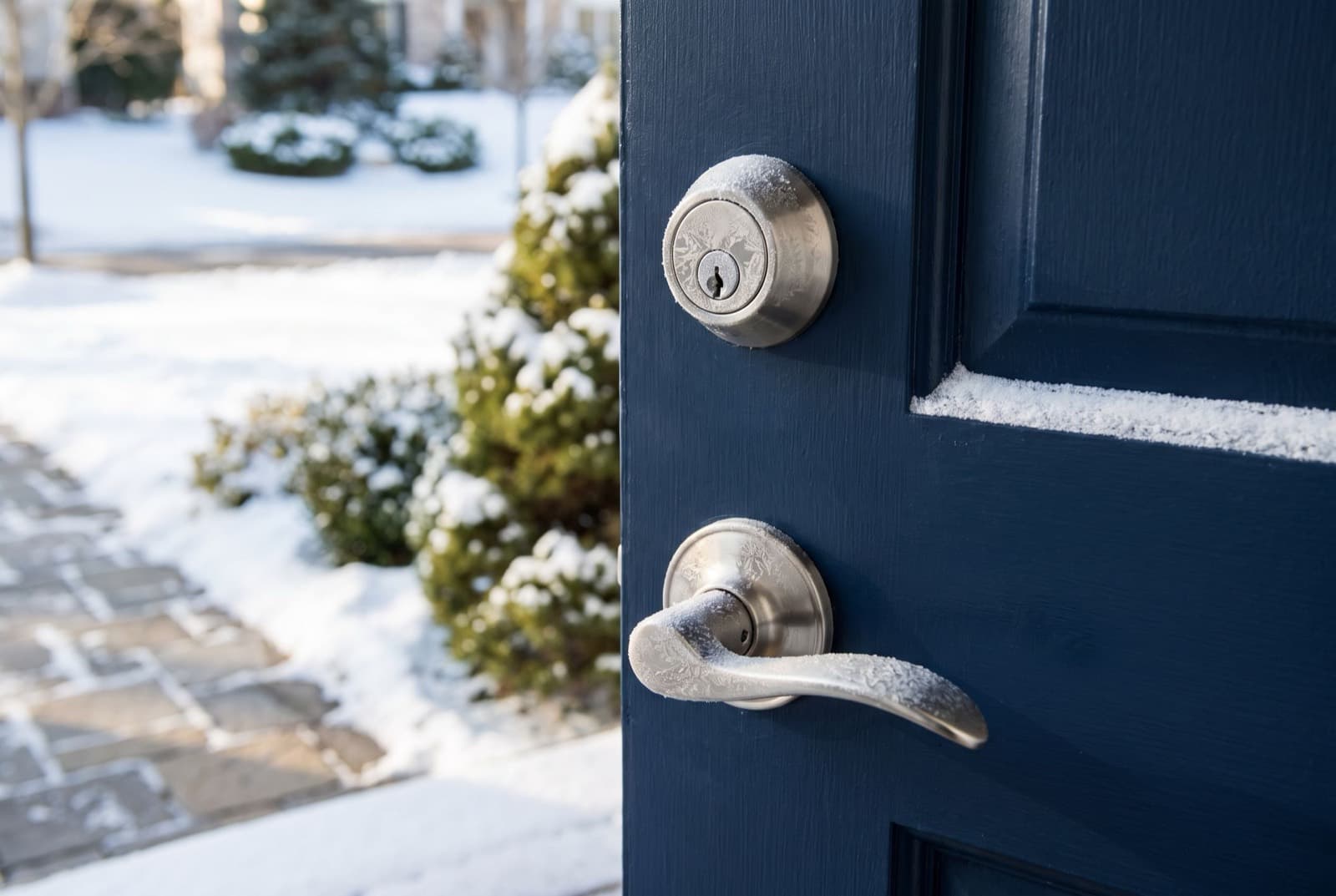
Every year it goes the same way. We get the first real hard freeze, and by the next morning my phone starts ringing. A key won't turn. A deadbolt that worked fine on Tuesday is stuck on Wednesday. A front door that closed with a gentle push now needs a shoulder to latch. Cold weather doesn't break locks all at once, but it finds every weakness you've been ignoring since last winter.
As a residential locksmith working across Boston, I can tell you most of these calls are preventable. Here's what's going on and what to do about it.
Why Cold Weather Breaks Locks
A few different things happen at once when the temperature drops, and they stack on top of each other.
Moisture freezes inside the cylinder. Rain, sleet, and melting snow work their way into the keyway. When the temperature falls, that water freezes around the pins and the pins can no longer move. The key goes in, but nothing turns.
Metal contracts. Brass, steel, and zinc all shrink slightly in the cold, and they don't all shrink at the same rate. Parts that fit together smoothly in September can bind in February.
Old lubricant thickens. Grease and household oil that felt fine in the summer turn into something closer to paste when it's cold. The mechanism gets sluggish, then stiff, then stuck.
Your door moves. Wood doors and frames swell and shift with moisture and temperature. Even steel doors sit differently in a frame that's moving. When the bolt no longer lines up with the strike plate, the deadbolt drags or refuses to throw at all. Weatherstripping also compresses in the cold, which changes how the door sits in its opening.
If Your Lock Is Already Frozen
First, what not to do, because I've seen the damage both of these cause.
Don't force the key. If it won't turn, stop. Twisting harder is how keys snap off inside the cylinder, and then a simple freeze becomes a lock repair job.
Don't pour hot or boiling water on it. It feels like the obvious fix, but the water runs into the mechanism and refreezes, often worse than before. The sudden temperature swing can also crack hardware and damage the finish.
Here's what works instead. Use a proper lock de-icer made for this purpose, which melts the ice and leaves a little lubricant behind. Warm the metal key gently in your hands, then try it again. Or warm the key or the cylinder with a hairdryer held several inches away, moving it around rather than baking one spot. Give it a minute, try the key lightly, and repeat if you need to.
Your Pre-Winter Checklist
Do these while the weather is still cooperative, ideally before the ground freezes.
- Lubricate with the right product. Use a dry graphite or PTFE-based lubricant in the keyway. Skip WD-40 and household oils. They attract dirt and grit, then gum up and thicken when it's cold, which makes the problem worse a month later.
- Test every deadbolt. Close the door and throw the bolt. It should extend fully into the strike plate without dragging, lifting the door, or needing a push. If you have to fight it in October, it will be worse in January.
- Adjust the strike plate now. If the bolt is slightly off, the strike plate can often be shifted or re-set while the door still lines up. Waiting until the frame has swollen or settled makes it harder.
- Inspect weatherstripping and door sweeps. Look for gaps, cracking, or flattened sections. Good seals keep moisture away from the lock and keep the door sitting where it should.
If you'd like a second set of eyes, our lock repair service includes exactly this kind of check. It's also a smart moment to consider rekeying your locks if you've had a tenant change, a contractor, or a lost key in the past year, since you're already looking at the hardware.
When to Call a Professional
Some problems aren't a DIY job, and trying to push through them usually costs more later. Call someone if:
- A key snapped off in the cylinder. Don't dig at it with a pin, which tends to push the piece deeper.
- The cylinder spins freely. If the key turns but nothing engages, something inside has failed.
- The deadbolt won't align even after adjusting the strike. That points to a door or frame that has shifted, and it may need a more involved fix than a quick adjustment.
Whether you're in Boston proper or a surrounding town, we'll tell you straight whether the lock needs a repair, an adjustment, or simply a better lubricant. A few minutes with graphite and a screwdriver before the first freeze beats standing outside in January with a stuck key.
City Locksmith 24/7 is a Commonwealth-registered business that's kept Boston doors working through more than 15 winters. Learn more about how we work, or call (617) 383-7290 if your lock won't budge — we'll get you back inside safely, without breaking anything.