If you own rental property in Boston, you already know the calendar. Leases cluster around September 1, and in student-heavy neighborhoods like Allston and Brighton, dozens of units change hands within the same few days. Movers are in the hallway, cleaners are waiting, and the next tenant is texting about their move-in time. In the middle of all that, keys quietly walk out the door with departing tenants, their roommates, their subletters, and every contractor or friend who was ever handed a copy.
I've worked with landlords across the city for 15+ years, and the ones who sleep best all do the same thing: they rekey every unit at every turnover. Here's how to make that simple.
Why Rekey Every Turnover
The honest answer is that you can't know how many copies of a key exist. A tenant may have cut two spares at a hardware store, lent one to a boyfriend or a cousin, left one with a former roommate, or given one to a painter who has since moved on. None of those people are bad actors, but none of them should still be able to open the door of someone who just moved in.
If a former occupant or someone they gave a key to walks in later, the new tenant has a serious safety problem, and you have a liability and reputation problem that no amount of apologizing fixes. Rekeying is a small, predictable step that takes that whole category of risk off the table. Treat it as ordinary risk management, the same way you'd treat smoke detector checks or an annual inspection.
Landlords are generally expected to hand over a unit with working, secure locks on the entry doors. Every situation is different, so confirm your specific obligations with a Massachusetts attorney or your local housing authority.
Rekey vs. Replace
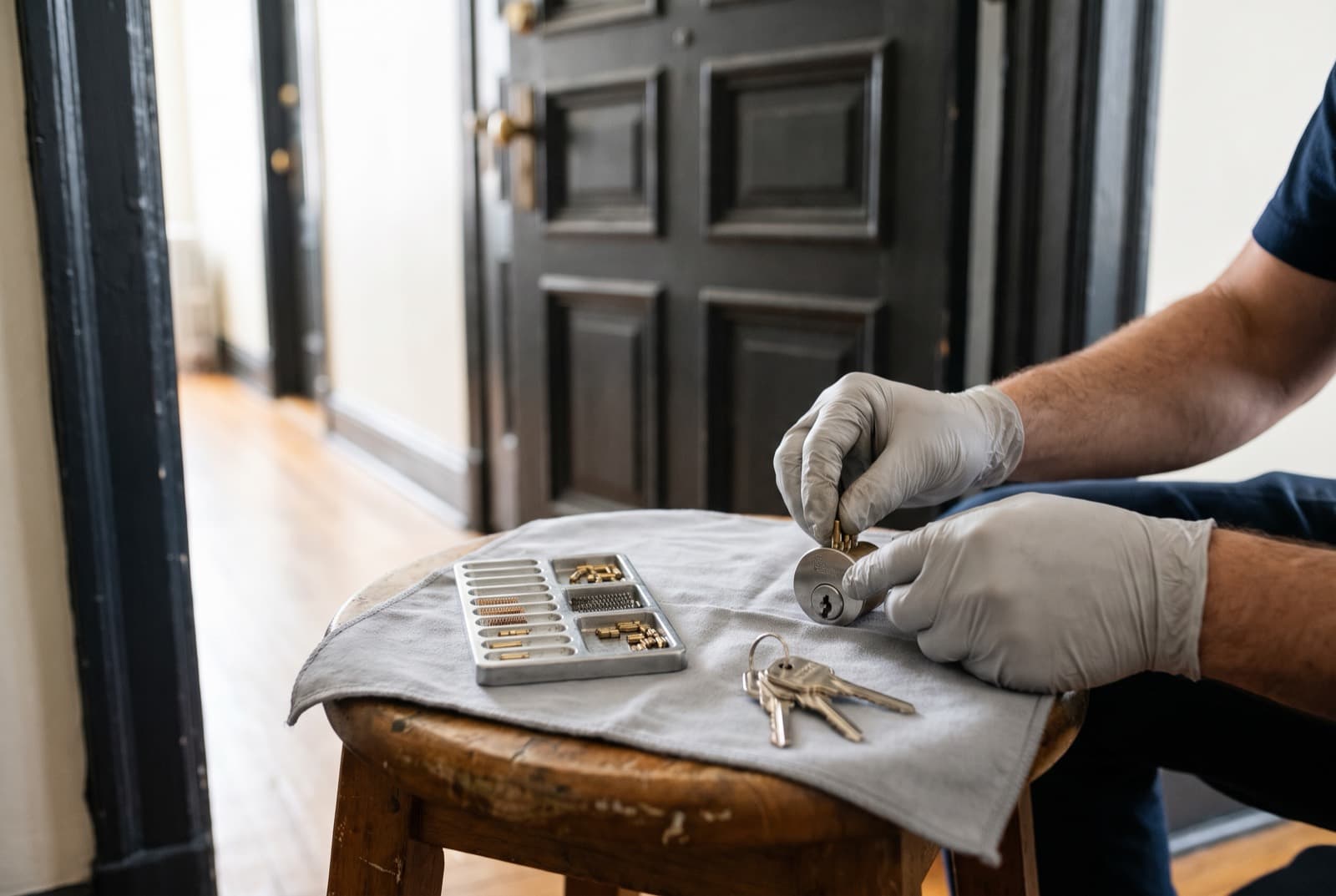
At turnover, rekeying is usually the faster and more economical choice. Rekeying keeps your existing hardware and changes the internal pinning so the old keys stop working and a new key takes over. The door looks the same, the lock works the same, and the previous tenant's copies become useless. If you want the mechanics, I walked through them in How Rekeying Works, so I won't repeat it here.
Replace the lock only when the hardware itself is the problem: a deadbolt that sticks, a worn or loose cylinder, a broken latch, or a cheap lock that was never going to hold up. If you're making that call on a whole building, that's worth a conversation, because upgrading once is often smarter than patching every year. Otherwise, rekeying gets you secure and ready faster.
Make It Routine, Not a Scramble
The landlords who struggle are the ones who treat rekeying as a favor to remember. The ones who don't struggle have turned it into a line on the checklist.
- Put it on the move-out checklist. Rekeying is a standard step, right next to the walkthrough and the key collection, not an afterthought.
- Schedule it in the gap. Book the locksmith for the window between move-out and move-in. The unit is empty, nobody is inconvenienced, and it's done before the next tenant arrives.
- Rekey every lock that tenant could access. That means the unit entry door, the mailbox, and any storage area, basement cage, or back door they had a key to.
- Don't forget the common doors. If the departing tenant had a key to a shared front entrance or hallway door, that lock needs attention too, or the new tenant is protected at their own door but exposed at the building's front door.
Small habits like these keep one missed step from becoming a lockout complaint or a security incident.
Scaling Up for Multi-Unit Owners
If you manage a triple-decker or a small multi-unit building, juggling a pile of different keys gets old fast. A master key system lets you or your manager carry one key that opens every unit, while each tenant's key opens only their own door. At turnover, only that unit's key changes, and your master access stays intact. I cover how these are set up for property managers in Master Key Systems for Boston Properties. For larger buildings and mixed-use properties, our commercial locksmith work follows the same approach, and for owners with just a unit or two, our residential service covers the basics.
Another option is a keypad or smart lock. With smart locks, changing the access code at turnover replaces the rekey entirely, there's no physical key to lose or copy, and you can issue and cancel codes without a site visit. They aren't right for every door or every budget, but they're worth a look for units that turn over frequently.
Keep Simple Records
A basic log goes a long way: which units were rekeyed, on what date, and who currently holds keys (tenant, manager, maintenance, emergency contact). A shared spreadsheet is enough. When a tenant says they lost a key or a neighbor asks who has access to the basement, you'll have the answer in seconds. And if there's ever a dispute, a dated record shows you handled the unit responsibly.
Find a Locksmith Who Can Keep Up
The real test for any rental locksmith is turnaround. When five units flip in the same week, you need someone who shows up on schedule, rekeys several doors in one visit, labels and organizes the keys, and answers the phone when a move-in runs early. Build that relationship before the busy season, not during it, and turnover week stops being a fire drill.
City Locksmith 24/7 is a Commonwealth-registered business that's kept rental properties across Boston secure for over 15 years. Learn more about how we work, or call (617) 383-7290 to set up a turnover schedule that fits your units.