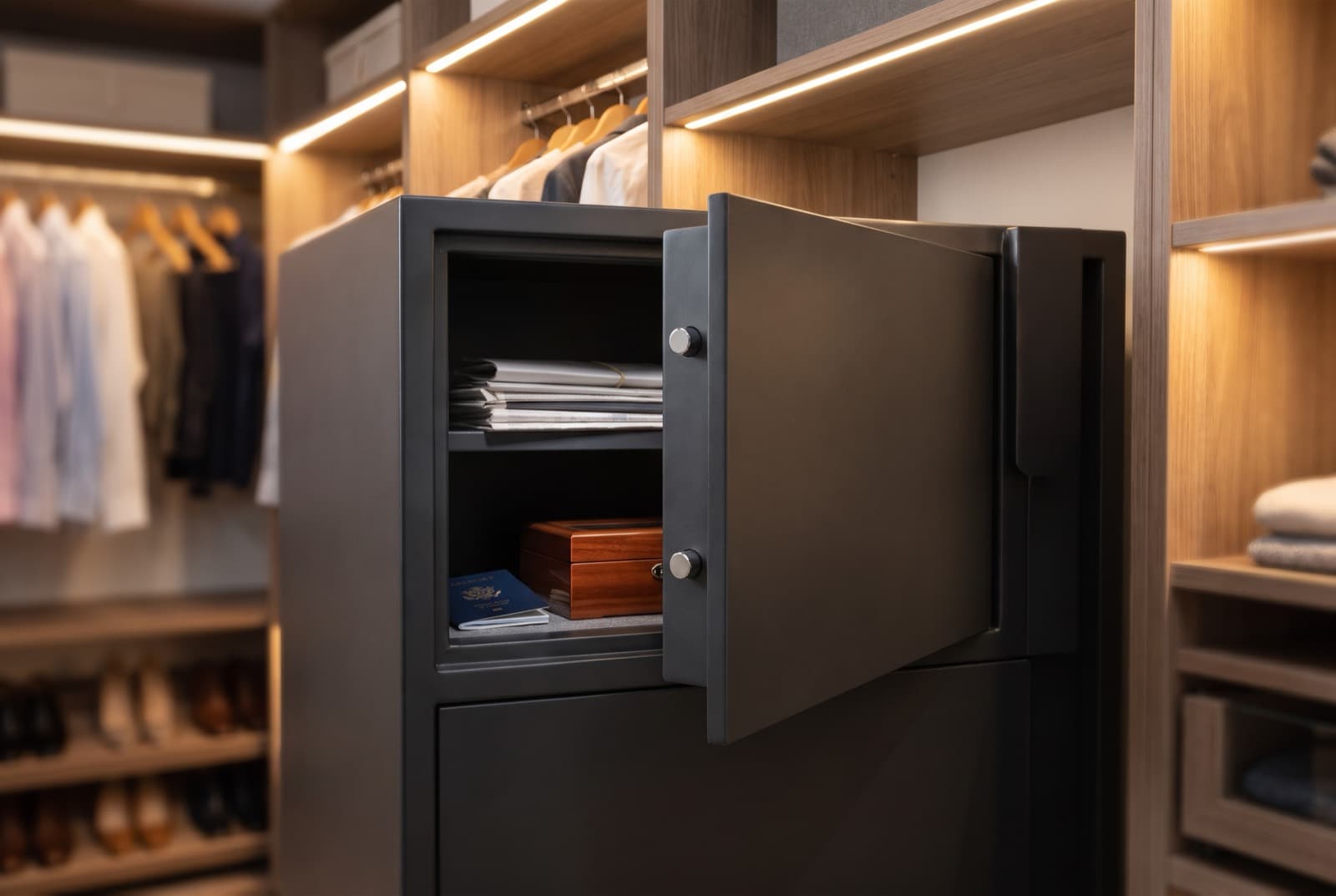
Before you look at a single safe, ask yourself one question: what am I protecting it from? Fire, theft, or both? Most people never answer that honestly, and it's the reason I get called to so many homes where the safe in the closet doesn't do the job the owner thought it did. The answer drives every other decision, from construction to size to where it ends up in your house.
As a residential locksmith who handles safe services across Boston, I've opened, moved, and installed a lot of them. Here's how I'd shop for one.
Fire Rating vs. Burglary Rating
These are two different specifications, and a lot of homeowners buy one believing they got the other.
A fire rating tells you how long the interior stays cool enough to protect paper or media while the outside is exposed to heat. A burglary rating tells you how well the safe resists a determined attempt to get into it, through prying, drilling, or cutting.
Here's the catch. A lightweight "fireproof" box from a big-box store may hold up fine against heat for a set time, but its walls are thin and its door can often be pried open in minutes. Meanwhile, a heavy burglary-resistant safe may have little real fire protection. If you care about both, look for documented ratings for both, and read what the label actually claims. A marketing word like "fireproof" on the front of a box is not a rating.
Anchoring Is the Part People Skip
An unbolted safe is just a box with your valuables already packed for the thief. Even a heavy one can be tipped, dragged, and loaded into a vehicle, especially if you live in a building with stairs and a quiet back door.
Anchoring matters more than paying for a heavier model. Bolt the safe to a concrete slab or through the floor into a structural joist, not just into subfloor. In an older Boston house that can mean working around uneven floors, plaster, and odd framing, which is exactly where having it done properly counts. If you're also looking at stronger hardware for the home, our lock installation work is a natural companion.
Size: Buy Bigger Than You Think
Almost everyone outgrows their safe. You start with a passport and a few documents, and a year later you've added a laptop backup drive, jewelry, a binder of records, and a few things you didn't plan on. Pick a safe larger than your current list, and check the usable interior, since shelves and thick walls eat up space.
Lock Type: Dial, Keypad, or Biometric
Each has trade-offs.
- Mechanical dial: No batteries and very reliable over decades, but slower to open, and you need to remember the combination.
- Electronic keypad: Fast and easy to use, but it depends on batteries and electronics. Change the batteries on a schedule, and know how to open the safe if the keypad fails.
- Biometric: Quick, with no code to remember, but fingerprint readers can be finicky with dry, wet, or cold hands, and long-term reliability varies a lot.
For most households, I'd lean toward the option you'll use correctly every time and maintain without thinking about it.
Where to Put It
Skip the master bedroom closet. It's the first place a burglar checks, so it's the worst place for your most valuable things. A less obvious interior spot, or a corner of the basement, is usually smarter.
One Boston-specific warning: basements here tend to be damp, and moisture is hard on paper, photos, and stored electronics. If a basement is your best location, plan for it. Keep contents sealed in protective bags, and use a desiccant inside the safe. Think about this whenever you place a safe anywhere in an older Boston home.
What Belongs Inside
Keep it practical. Documents such as birth certificates, deeds, and wills, passports and other identification, spare keys, small valuables, and backup drives are all good candidates. Don't store things you need daily, and don't pack it so full that you can't find anything in a hurry.
Installation and Placement Matter Most
A safe is only as good as its installation and placement. A well-chosen safe that's sitting unbolted in the first closet a thief opens is a weak setup, while a modest one that's anchored properly in a smart spot can protect you far better than you'd expect. If you want advice on what to buy, where it should go, or you'd like it installed correctly, that's what we do every day.
City Locksmith 24/7 is a Commonwealth-registered business that's helped Boston homeowners protect what matters for over 15 years. Learn more about how we work, or call (617) 383-7290 and we'll help you pick a safe, anchor it, and set it up right.