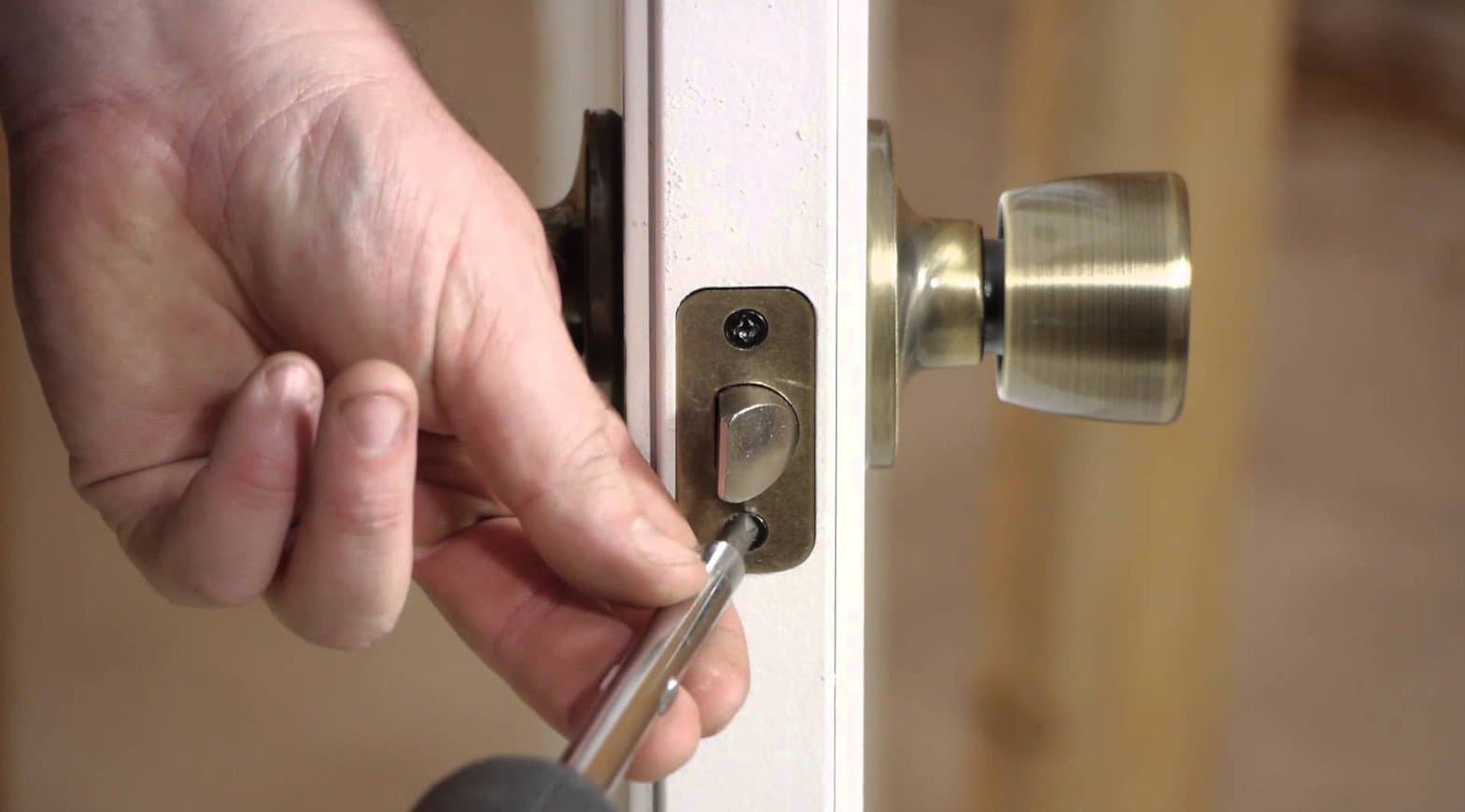
Most homeowners assume that paying more for a "smart" lock means getting better security. After 15 years of installing, servicing, and bypassing every major lock brand on the market, I can tell you firsthand: that assumption is dangerously wrong.
The biggest threat to your smart lock isn't a hacker with a laptop. It's a flathead screwdriver and a hammer.
The Lock Most People Actually Have
When people say "smart lock," they usually picture Bluetooth keypads and phone apps. But the physical hardware inside most consumer smart locks — the part that actually holds your door shut — is often a Kwikset SmartKey cylinder.
Kwikset's SmartKey system is found on millions of residential deadbolts and doorknobs across America, including many Bluetooth and Wi-Fi smart locks that use Kwikset internals as their physical backup. It's the default in big-box hardware stores. It's what most builders install in new construction.
And it has a fundamental mechanical weakness.
How the SmartKey System Works
A traditional pin-and-tumbler lock uses stacks of solid cylindrical pins that must reach a precise "shear line" before the lock can turn. It's a simple, robust design that has worked reliably for over a century.
The SmartKey system replaces those solid pins with a completely different mechanism:
- Wafers (Sliders): Five interlocking wafers move vertically when you insert a key. Each wafer has a series of grooves that must align perfectly.
- Sidebar: A metal bar runs along the side of the cylinder. When the correct key aligns the notches in all five wafers, the sidebar retracts, allowing the lock to turn.
- Reset Carriage: This is the "smart" part. It disconnects the wafers from the key's position so you can "teach" the lock a new key pattern without taking it apart.
That reset carriage is what makes instant rekeying possible. You insert the current key, push a small tool into the reset slot on the left side of the cylinder, then insert your new key and turn. The lock learns the new key pattern in seconds.
Convenient? Absolutely. But here's what the marketing doesn't tell you.
The 15-Second Break-In
Because the SmartKey system is designed to be repositioned, the internal components are necessarily thin, light, and malleable. Those unfixed wafers and the reset carriage don't have the structural mass of traditional solid pins.
A determined intruder can exploit this:
- Insert a modified key blank or pick into the keyway
- Tap it with a hammer to apply force to the internal wafers
- The thin wafers and reset carriage shatter from the impact
- With the internals broken, a flathead screwdriver turns the cylinder
- The deadbolt or doorknob opens
The entire process takes under 15 seconds and leaves no visible damage on the outside of the lock.
That last part is critical. With a traditional lock, forced entry usually leaves obvious marks — drill holes, pry damage, a visibly mangled keyway. With a SmartKey bypass, the lock looks perfectly fine from the street. Your insurance company may have a hard time proving forced entry even occurred.
Why Car Locks Don't Have This Problem
Car ignitions use a similar wafer-based system, but with one crucial difference: the wafers are fixed in place. They're engineered for durability across thousands of uses over 10 to 12 years. The wafers wear slowly over time (which is why your car key eventually gets harder to turn), but they're not designed to be repositioned.
There is no such thing as a "SmartKey" instant-rekey system in automotive locks. The car system is fixed, much more durable, and not vulnerable to the same shatter attack.
The SmartKey system traded that durability for consumer convenience. The ability to rekey your own lock without calling a locksmith comes at the cost of the lock's physical integrity.
The Digital Part Is Actually Fine
Here's the irony: the Wi-Fi and Bluetooth components of most smart locks are reasonably secure. Reputable brands like Schlage, Yale, and August use AES-128 bit encryption — the same standard recommended by NIST for protecting sensitive data. For a random burglar, digitally cracking a properly encrypted smart lock is orders of magnitude harder than just throwing a brick through a window.
The weak link isn't the software. It's the physical cylinder holding the door shut.
What I Actually Recommend
If you want smart features with real physical security, here are three approaches I trust:
1. Schlage Encode Plus
Schlage approaches smart locks differently than Kwikset. The Encode series uses a traditional 6-pin tumbler cylinder — solid pins, not wafers. You can't shatter the internals with a screwdriver and a hammer because there's no fragile reset carriage inside.
Many of their smart deadbolts carry ANSI/BHMA Grade 1 certification, the highest commercial standard for durability and security. The Encode Plus also supports Apple Home Key, so you can tap your iPhone or Apple Watch to unlock. Consumer Reports and Wirecutter consistently rate Schlage smart locks among the best for physical security.
2. Yale Assure Lock 2 (Key-Free)
Yale is owned by Assa Abloy, the largest commercial lock manufacturer in the world. Their key-free smart locks eliminate the exterior keyway entirely.
No keyhole means nothing to pick, bump, shim, or shatter. The trade-off: if the internal motor fails, there's no mechanical override. But the lock has emergency 9V battery terminals on the exterior for jump-starting a dead battery.
3. August Retrofit Lock
This is often the best compromise. The August retrofit doesn't replace your physical lock at all. It only replaces the manual thumb-turn on the inside of the door.
If I install a heavy-duty Schlage B600 commercial deadbolt on your door, it stays exactly as it is. The exterior lock remains completely intact. The smart features are layered on top of the existing hardware, not built into the weak point.
The Bottom Line
Your father — or your locksmith — is right to be skeptical of smart locks. But the answer isn't to avoid them entirely. The answer is to separate the convenience layer from the security layer.
Put a commercial-grade deadbolt on your door. Then add smart features on top of it with a retrofit lock, or choose a brand that uses real pin-and-tumbler hardware instead of cost-cutting wafer systems.
The front-end convenience shouldn't compromise the back-end mechanical chassis. That's true in software engineering, and it's true on your front door.
Ray Feuerstein has been a mobile locksmith serving Greater Boston for over 15 years. For a free assessment of your current lock hardware, call (617) 383-7290.